Key points
- The Specified Skilled Worker (SSW) visa lets you work full-time in Japan in sectors such as caregiving, food service, construction, agriculture and hotels.
- You need to pass a skills test and a Japanese test (JFT-Basic A2 or JLPT N4).
- After you get a job offer, your employer applies for your Certificate of Eligibility (COE). You then get a visa from the Embassy of Japan in Kathmandu and a labour permit from Nepal's Department of Foreign Employment.
- In Japan you must be paid the same as Japanese workers, and you get support in a language you understand.
- Recruitment agencies in Japan are, in principle, not allowed to charge job seekers a placement fee. Never pay anyone for a "guaranteed visa".
What is the SSW visa?
Specified Skilled Worker (SSW) is a Japanese residence status that lets foreign workers with certain skills work in sectors that are short of workers. It started in 2019, and Japan and Nepal have a Memorandum of Cooperation (MOC) on SSW.
SSW (i) and SSW (ii)
- SSW (i): work that needs some knowledge or experience. You can stay in Japan for up to five years in total, and family members generally cannot join you.
- SSW (ii): work that needs proficient skills. There is no limit on renewals, and your family can join you if you meet the requirements.
Which jobs?
There are 16 sectors, including caregiving (nursing care), food service, construction, agriculture, food manufacturing and accommodation (hotels). In January 2026 Japan decided to add three more: logistics warehousing, resource recycling and linen supply. Check the Immigration Services Agency's official announcements for when these open.
Who can apply for the SSW visa?
- You are 18 or older.
- You have passed the skills test for your sector.
- You have passed a Japanese test: JFT-Basic at A2 or above, or JLPT at N4 or above. Caregiving also requires the Nursing Care Japanese Language Evaluation Test.
- If you completed Technical Intern Training (ii) in good standing, you are exempt from the tests in a related sector.
SSW tests you can take in Nepal
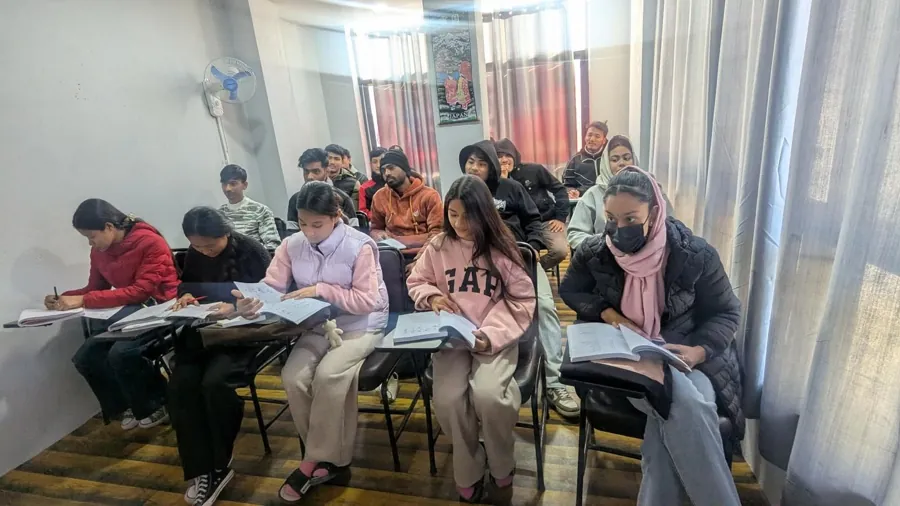
JFT-Basic (the Japan Foundation Test for Basic Japanese) is a computer-based test that you can take in Nepal. Skills tests are different for each sector, and so are their locations and dates. Some sectors, such as caregiving and accommodation, have held tests in Nepal, including in Kathmandu and Pokhara. Always check dates and registration on the official websites.
Free study materials: the Japan Foundation publishes IRODORI: Japanese for Life in Japan, a free textbook for the Japanese needed to live and work in Japan, at the level of JFT-Basic.
Going to Japan from Nepal: step by step
Prepare and pass the tests
Pass the Japanese test and the skills test for your sector.
Find a job and interview
You can apply to Japanese employers directly, or through a licensed recruiting agency in Nepal or a placement agency in Japan. Japanese employers can also send job openings through the Embassy of Nepal in Tokyo to the Japan unit of the Department of Foreign Employment (DoFE), which publishes them for job seekers.
Sign the employment contract
Only sign once you understand the pay, working hours, type of work and housing. Since 1 July 2025, employers must have the job's demand letter attested by the Embassy of Nepal in Tokyo, so ask whether your job's demand letter has been attested.
Your employer applies for your COE
Your employer applies to Japanese immigration for your Certificate of Eligibility (COE) and sends it to you once it is issued.
Apply for your visa
Take your COE to the Embassy of Japan in Kathmandu and apply for your visa.
Pre-departure steps in Nepal
Have a health check at a designated medical institution, attend a 2–3 day pre-departure orientation, take out foreign employment insurance and pay into the welfare fund for migrant workers.
Get your labour permit
Apply online to DoFE's Japan unit for your labour permit. It is checked when you leave Nepal. The steps from the health check to the labour permit take about 10 days.
Arrive and start work
When you land in Japan, you are granted SSW status. Your support, such as a life orientation, starts after you arrive.
Nepal's rules and required documents can change. Check the latest notices from the Department of Foreign Employment and the Embassy of Nepal.
If you are already in Japan
Students at Japanese language schools or vocational colleges, and former technical interns, can switch to SSW without leaving Japan:
- Pass the skills test and the Japanese test (or have completed Technical Intern Training (ii) in good standing).
- Sign a contract with an employer.
- Apply to your regional immigration services bureau to change your residence status to SSW.
- Once it is approved, you are done.
If you later visit Nepal, you need to get a labour permit from DoFE's Japan unit before returning to Japan.
For the full steps, documents, fees and common mistakes, read our guide to changing from a student visa to an SSW visa.
Your rights in Japan
- Equal pay: you cannot be paid less than a Japanese worker doing the same job. In principle you are employed directly by the company, full-time.
- Support in your language (SSW (i)): your employer or its Registered Support Organization must give you support such as information before you come, airport pick-up, help finding housing, a life orientation, help with government procedures, chances to learn Japanese, and someone to talk to about problems and complaints. This support must be in a language you understand.
- You don't pay for the support: the cost of this support cannot be charged to you, directly or indirectly.
- Changing jobs: you can change employers within the same sector, through the immigration procedures.
Costs and how to avoid scams
Some costs in Nepal are normal: test fees, your passport, the health check, the orientation, foreign employment insurance and the welfare fund. Be careful if someone:
- asks for money for a "guaranteed visa" or a "sure job"
- asks for a large "processing fee" or "matching fee"
- is not licensed by the Department of Foreign Employment (check the licence on DoFE's website)
- won't give you a written contract, or gives you one in a language you can't read
- wants to keep your passport
Under Japan's Employment Security Act, recruitment agencies in Japan are, in principle, not allowed to charge job seekers a placement fee. Going to Japan with a large debt can cause serious problems later.
Changes from 2027
From 1 April 2027, the Technical Intern Training Program (TITP) ends and a new system, Employment for Skill Development (ESD), begins. ESD aims to train workers to SSW (i) level over about three years. Nepal is reported to be preparing its own procedures for ESD.
FAQ: Japan SSW visa from Nepal
Can I go without speaking Japanese?
No. You need at least JFT-Basic A2 or JLPT N4. Better Japanese also means better jobs and an easier life in Japan.
Can I take the tests in Nepal?
JFT-Basic is held in Nepal. Skills tests depend on the sector, and some sectors, such as caregiving and accommodation, have held tests in Nepal.
Do I have to go through an agency?
Japan allows employers to recruit directly. However, since July 2025 the demand-letter attestation at the Embassy of Nepal requires a licensed sending organization's licence, so a licensed agency is usually involved. Never go through an unlicensed agency.
How long does it take?
It depends on your tests, documents and processing times. In Nepal, the steps from the health check to the labour permit take about 10 days.
Can my family come with me?
Generally not on SSW (i). On SSW (ii), yes, if you meet the requirements.
How much will I earn?
Your pay must be at least the same as a Japanese worker doing the same job. It varies by sector and region, so read your contract carefully.
Summary
To work in Japan on an SSW visa from Nepal, pass the skills and Japanese tests, find a job, then get your COE, visa and labour permit. In Japan you have the right to equal pay and support in your own language.
Use only licensed agencies, never pay for a "guaranteed visa", and ask questions until you understand your contract.
B&P Co., Ltd. · Hakata, Fukuoka
Want to work in Japan? Talk to B&P
We support you in Nepali, from preparing in Nepal at our Hakata Education Consultancy to settling into life in Japan.
- Licensed placement agency
- 40-ユ-301603
- Registered Support Organization
- 25登福労-000005
- Languages
- 日本語 · नेपाली · English